In traditional Gers, the floor is often covered in linoleum or rugs. The Redesign: Use polished concrete with brass inlay lines. These lines can subtly trace the cardinal directions (North, South, East, West), essentially turning the entire floor into a compass—a nod to the nomadic necessity of navigation, embedded permanently into the architecture.
Spiritual geometry: Neo-Nomad
Share :
Modern design aesthetics
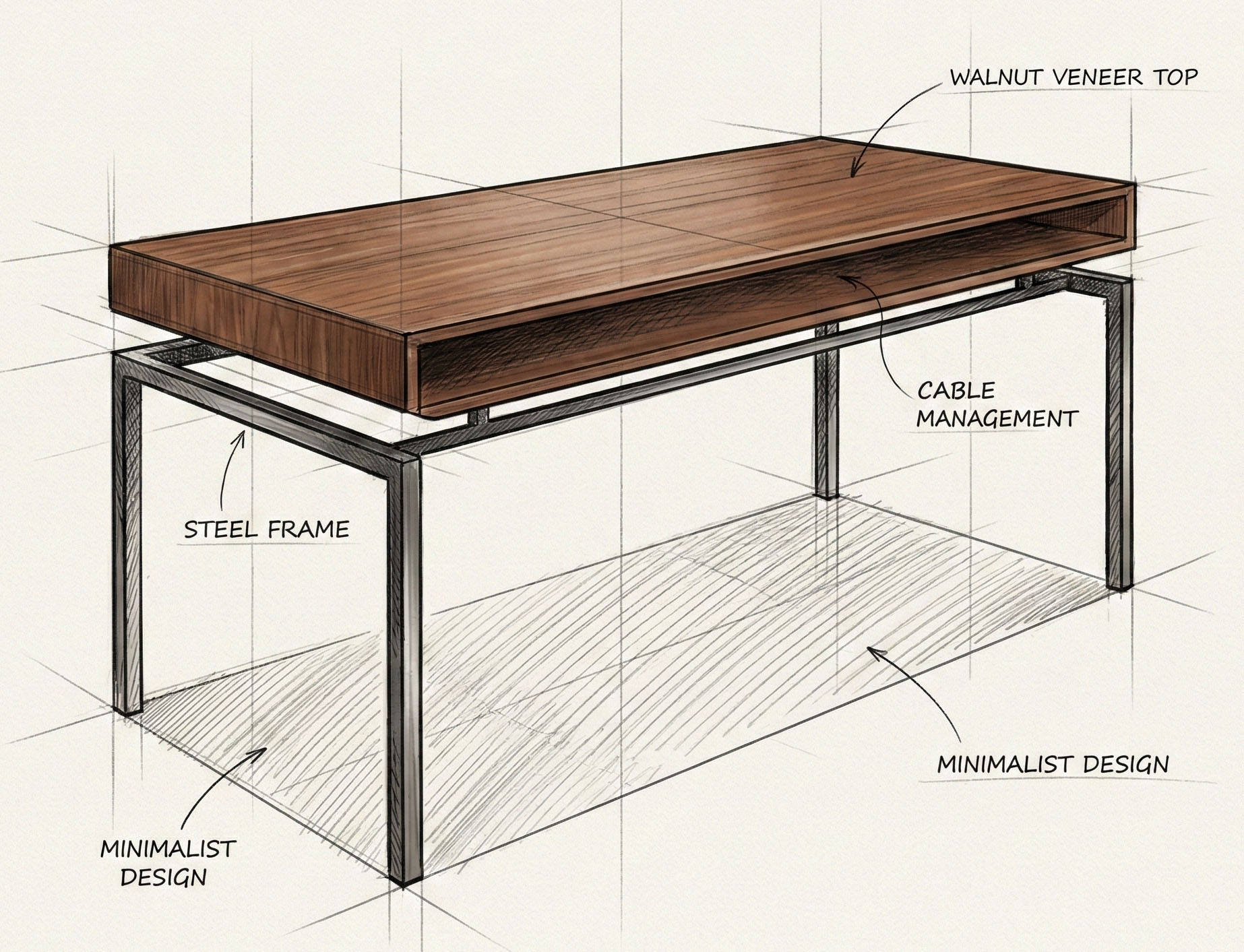
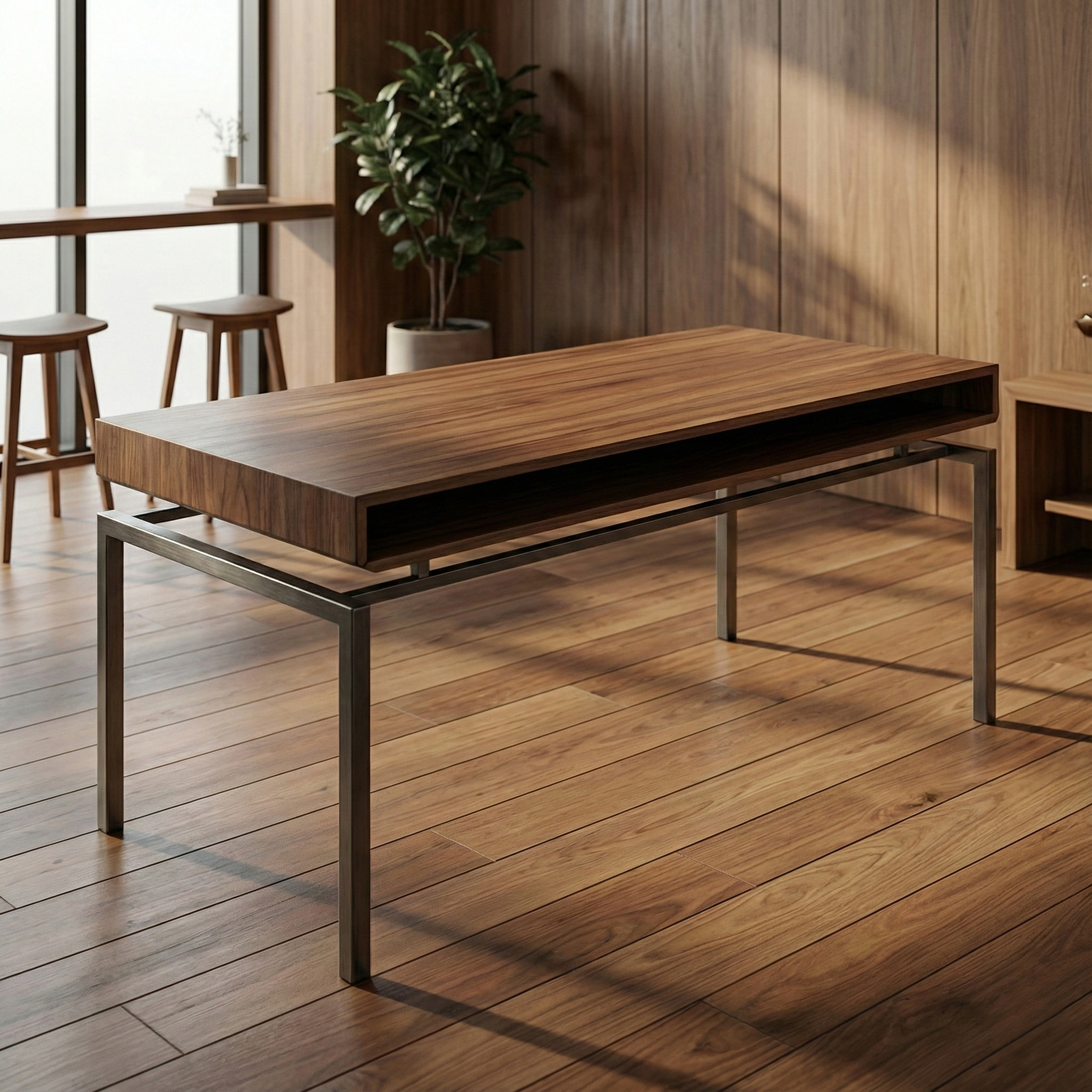
A premium minimalist desk featuring a walnut veneer top paired with a matte black steel frame.
Designed for modern workspaces, the desk integrates a hidden cable management shelf for a clean,
organized look.
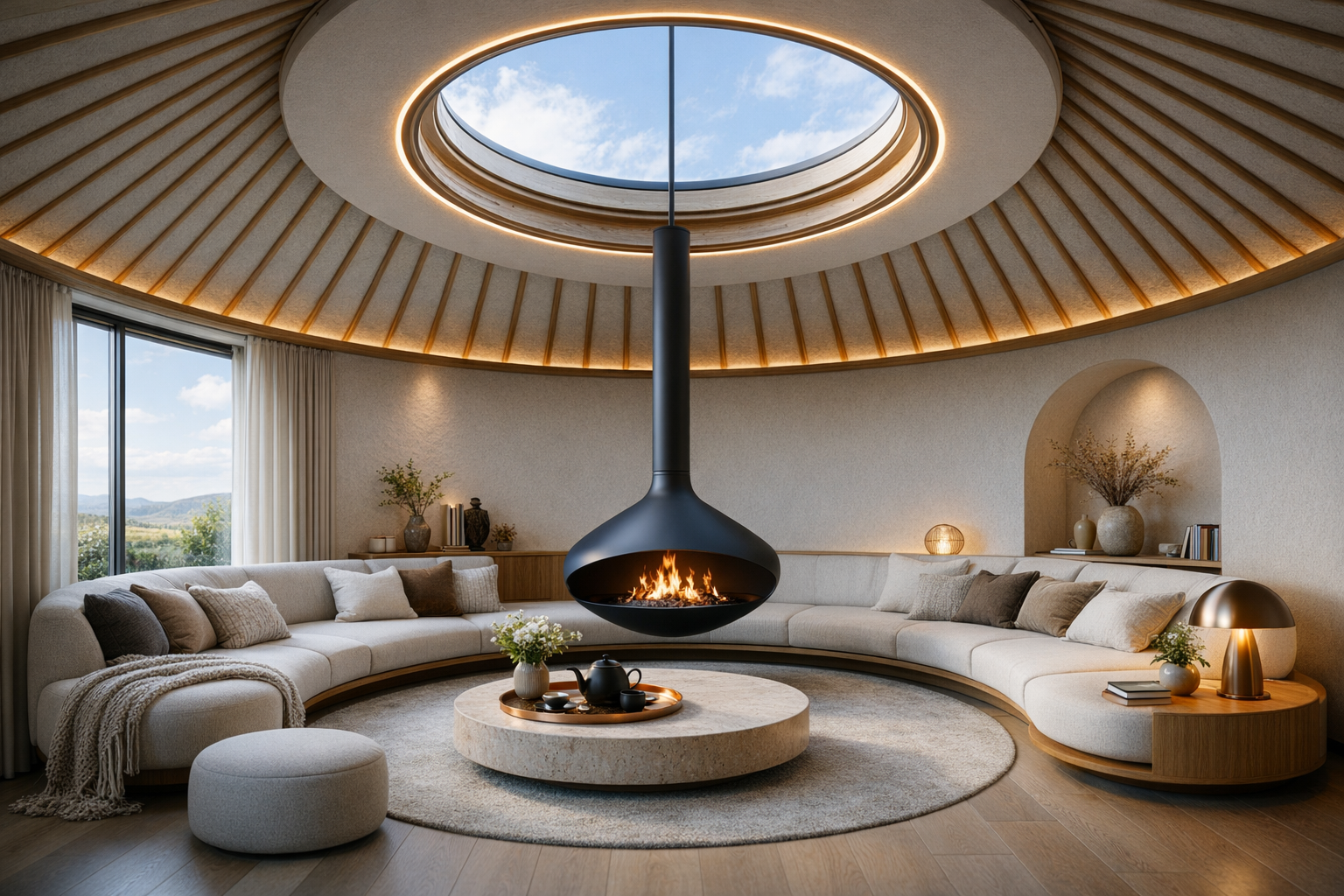
Here is a conceptual breakdown for a “Neo-Nomad” interior.
1. The Shell: The “Infinite” Circle
In a traditional Ger, the lattice walls (khana) are visible. In this modern version, we smooth the boundaries to create a sense of infinity.
-
The Walls: Instead of exposed lattice, use seamless curved plaster or micro-cement in a soft, warm “Sheep’s Wool” white. This eliminates corners and shadows.
-
The Texture: To honor the felt insulation of the past, cover the rear half of the room (the sleeping zone) in monochromatic acoustic felt panels. These should be light grey or cream, arranged in a subtle geometric pattern that mimics the diamond shape of the lattice but feels like a sci-fi spaceship interior.
2. The Core: The Levitating Hearth
The center of the Ger (Gal) is sacred. In a futuristic design, we treat gravity as optional.
-
The Fireplace: Instead of a heavy cast-iron stove sitting on the floor, envision a suspended fireplace. A sleek, black matte steel tube hanging from the ceiling, hovering just above the floor.
-
The Fire: Use a bio-ethanol or vapor flame. It provides the visual of the “eternal fire” without the smoke or ash, keeping the minimalist aesthetic pure.
3. The Ceiling: The Digital “Toono”
The Toono (roof ring) is the connection to the sky (Tengri).
-
The Design: A massive, rimless circular skylight.
-
The Tech: Surrounding the glass is a hidden tunable LED ring light.
-
Day Mode: It emits a cool, bright daylight white (6000K) to boost energy.
-
Night Mode: It shifts to a deep, warm amber (2700K) or a soft “moonlight” blue, mimicking the open sky at night.
-
4. Furniture: “Low-Poly” Tradition
Traditional Mongolian furniture is boxy and painted. We will keep the “low” profile but change the form.
-
The Seating: A custom curved modular sofa that hugs the perimeter of the wall. It should be “floating” (recessed base) so it looks like it’s hovering off the floor.
-
The Altar (Khoimar): The most respected part of the Ger (North side) is usually a chest of drawers. Replace this with a minimalist niche built into the curved wall. Inside, place a single traditional object (like a silver bowl or Morin Khuur) illuminated by a spotlight—treating heritage as high art.
5. Color Palette & Materials
Avoid the traditional bright reds/greens/oranges. Use the colors of the landscape.
-
Palette:
-
Base: Bone White, Limestone Grey, Pale Birch Wood.
-
Accent: Burnished Copper. Use copper for light fixtures or thin inlay lines in the floor. This is a modern nod to the traditional orange but much more sophisticated.
-
Contrast: Deep Charcoal (for the central fireplace only).
-